
Technological leadership needs foresight: the new TLM, which visitors had the opportunity to experience at the Gerhard Schubert exhibition stand, is the result of an intensive development process, spurred on by a competitive environment and the ambition to future-proof the core technology from Crailsheim.

Three years ago, word got round that a new milestone was imminent for Schubert’s TLM technology. The catalyst was a prototype the company presented to a specialist audience for the first time – also at interpack. This development gave a glimpse that a new generation of TLM would redefine many features, from the control architecture to the frame design. The industry’s curiosity was sparked, and in many discussions with customers, it became clear what would be needed to bring a production-ready model to market.
Three years later, the result of this work is on display in Düsseldorf. The new TLM generation bears little resemblance to the pre-production model from 2023. And for good reason: since 2023, the market has undergone further changes: “The increased cost sensitivity of many customers and the growing competitive pressure from Asia presented us with a significant challenge,” explains Manuel Schuster, Head of New Product Development for Assemblies at Gerhard Schubert. “This made us all the more determined to bring a solution to market with the next TLM that underscores our innovative strength as a technology leader, while meeting the high demands on performance, space requirements and price.”

A more rigid frame, greater picker performance
The frame is striking, with its slightly curved design clearly signalling that Schubert is breaking new ground. But not purely for aesthetic reasons: the new design enables the F4 robots, with their AI-supported path calculation, to fully leverage their performance. “The frames used previously flexed too much to allow the pick & place robots to operate precisely at high speeds,” explains Volker Haaf, Head of Development – Electronics and Software at Schubert. In collaboration with Dresden-based Schubert Motion, a frame variant four times stiffer was subsequently developed, ensuring flawless pick & place at maximum speed.
What makes the new TLM stand out is that, despite its unchanged weight, Schubert succeeded in optimising the machine’s costs – a key prerequisite for surviving in today’s highly competitive environment. At the same time, the company has further refined the TLM. Thanks to an intelligent redesign, more process and automation technology can be integrated into the frame while maintaining the same external dimensions – enabling a significantly higher functional density: “More technology in the same space expands the potential applications for our customers and makes the entire system even more efficient. With the new TLM, we are deliberately entering new performance areas,” explains Haaf.
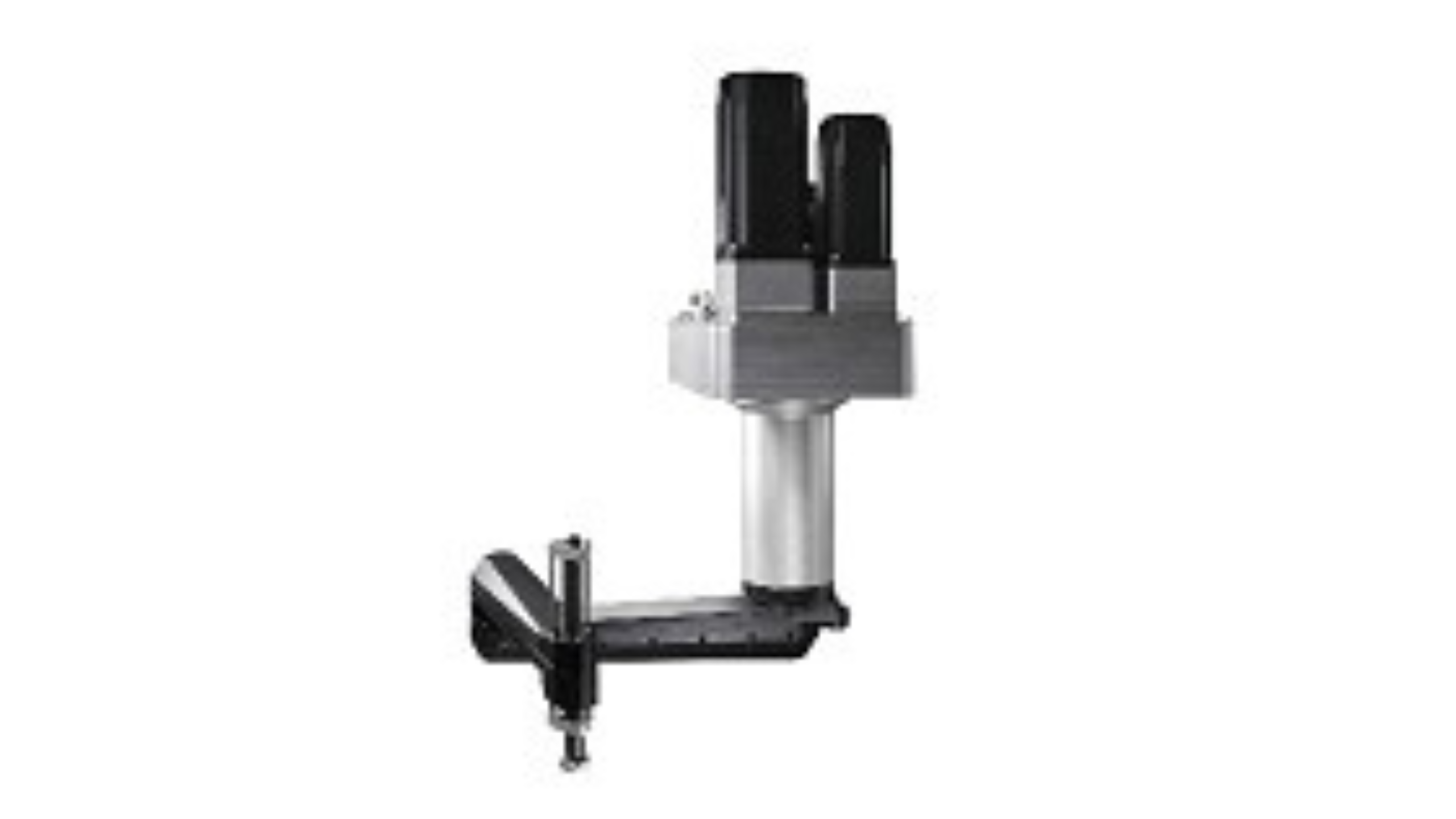
Visitors to interpack had an opportunity to see this for themselves at the stand: as a Flowpacker, the new TLM generation packed stacked round biscuits into flowpacks. Five F4 units in three cells packed 800 biscuits or 266 flowpacks per minute at a film speed of 30 metres per minute. The new TLM generation’s robots use the twin-pick method developed by Schubert: this allows two products to be picked simultaneously rather than sequentially – “another key factor in achieving higher performance,” points out Manuel Schuster. The robots’ path calculation, which is recalculated for every pick, is unique in its design. “This enables us to increase the performance of each robot arm by 20 per cent without straining the mechanics – and we also reduce vibrations,” says Haaf.
The new TLM also delivers significant energy savings: the new generation of machines is equipped with self-optimising vacuum pumps, which make a major contribution to energy efficiency. This reduces compressed air consumption, for example for suction tools, by approximately 30 per cent. “Vacuum technology accounts for close to half of the total energy requirement in a picker line. The impact the new pumps have on the system’s overall energy efficiency is just as significant,” explains Manuel Schuster.
EtherCAT for field communication
With the latest TLM generation, Schubert is switching to the EtherCAT protocol for the automation components in its new control system, replacing the previous Sercos-III protocol. EtherCAT has become popular in the field of dynamic motion applications and is therefore ideally suited to high-speed robotics.
With all these innovations, production staff won’t have to compromise on Schubert’s tried & tested operating concept: operators can still control the machines and monitor processes via clearly laid-out HMI screens – and do so with significantly greater flexibility than before. As detachable tablets, the screens can be used in a decentralised manner and enable web-based interaction with the line. Especially on comprehensive lines, operators don’t need to return to a fixed interface to evaluate information, change formats or carry out maintenance work. They can do this conveniently from their current location and respond more quickly when necessary – an important prerequisite for complying with regulations such as the Cyber Resilience Act, which mandates the secure operation of systems through ongoing configuration and updates.
In terms of design, the new TLM also offers users freedom of choice: Schubert has launched the innovation in two colour schemes – black-grey and white. Since interpack, new-generation picker lines and flowpackers have been available on the market. And Schubert aims to roll out the new approach across the entire TLM portfolio by 2028.