


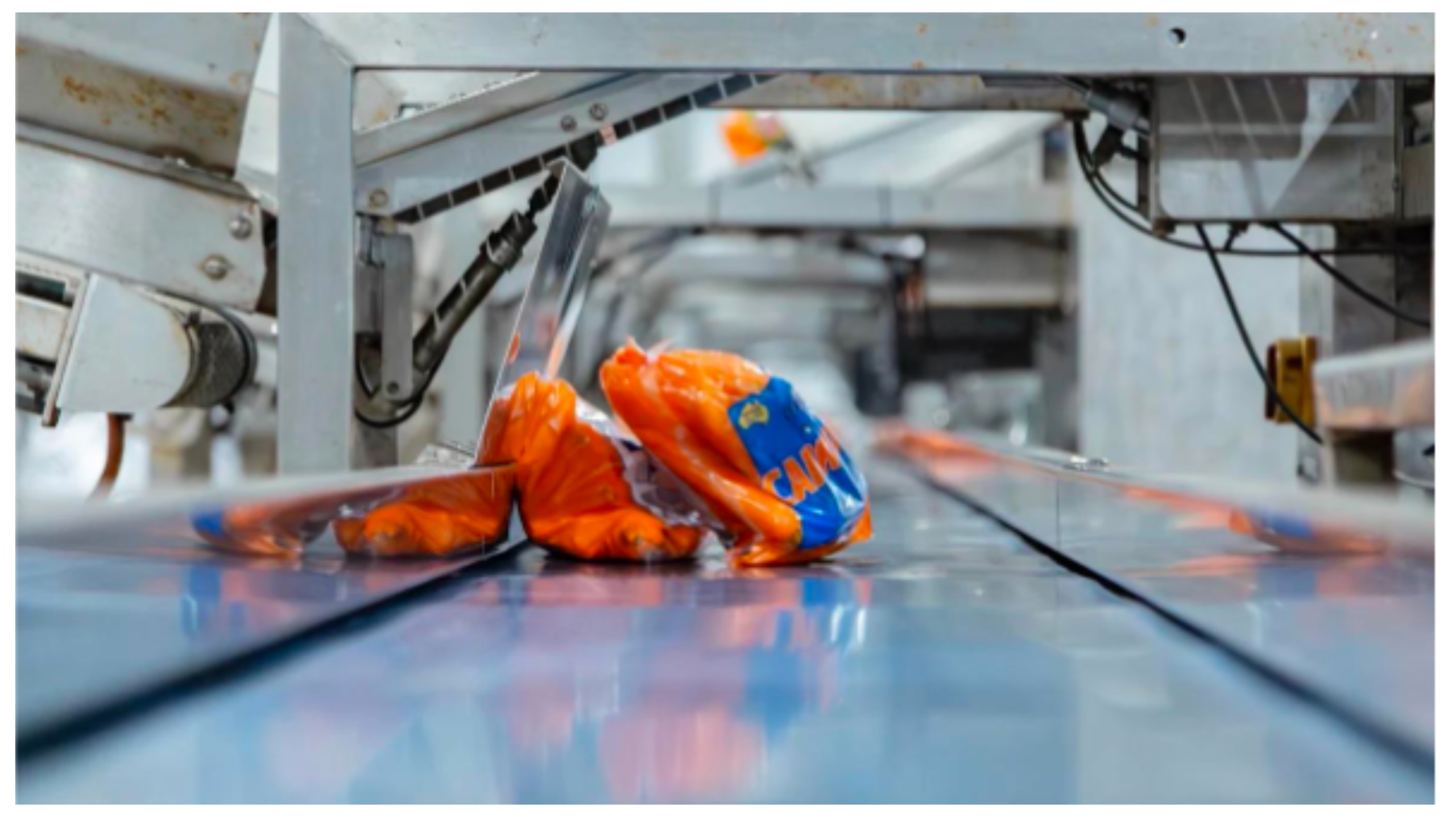
In modern vegetable processing, product quality is no longer judged only at harvest. Retailers, foodservice operators, and consumers increasingly assess produce based on appearance, consistency, shelf life, and waste levels throughout the supply chain.
For processors, this means one thing: how produce is handled after harvest has a direct impact on commercial value.
Bruising, skin damage, cuts, and impact stress may seem minor during processing, but these issues can shorten shelf life, increase shrinkage, reduce pack-out quality, and ultimately affect retailer confidence. Gentle handling is therefore not simply a “nice to have” feature of a processing line. It is a key operational strategy that protects product value from intake through to final pack.
As labour pressures, sustainability targets, and retail expectations continue to rise across the globe, processors are increasingly investing in systems that reduce unnecessary handling and protect crop integrity throughout the process.
Physical Damage Matters More Than Ever
Root vegetables naturally experience stress during harvesting and transport. By the time product reaches the packhouse, processors are already managing variability in crop condition, moisture levels, soil contamination, and skin sensitivity.
If processing equipment introduces additional impacts, pressure points, or uncontrolled drops, the damage compounds quickly.
This damage often appears in several ways:
⦁ Bruising beneath the skin
⦁ Surface scuffing and abrasion
⦁ Cuts or fractures
⦁ Increased dehydration
⦁ Faster bacterial or fungal development
⦁ Reduced visual quality at retail
The challenge is that much of this damage is not immediately visible. Produce can leave the factory looking acceptable, only for defects to appear later during storage, transport, or on the retailer shelf.
For processors supplying supermarkets or premium fresh markets, this creates significant commercial risk.
Gentle Handling Extends Shelf Life
One of the biggest benefits of gentle handling is improved shelf life.
When produce skin is damaged, it loses moisture faster and becomes more vulnerable to microbial growth. Even small impacts can accelerate deterioration during transport and retail display.
Protecting produce during washing, conveying, polishing, sizing, and filling helps maintain:
⦁ Skin integrity
⦁ Natural moisture retention
⦁ Consistent appearance
⦁ Product firmness
⦁ Retail display life
This is particularly important for crops such as carrots, potatoes, parsnips, and beetroot, where visual presentation strongly influences purchasing behaviour.
Research and industry experience increasingly show that reducing impact damage early in the process has measurable downstream benefits in waste reduction and product consistency. Wyma’s technical teams regularly work with processors focused on reducing food waste and improving shelf life outcomes through line design improvements and handling optimisation.
Every Transfer Point Matters
Gentle handling is not determined by one machine alone. It is created through the entire process design.
Many product damage issues occur at transition points between equipment rather than inside the machines themselves. Poorly controlled drops, sudden acceleration, uneven flow, or bottlenecks can all create unnecessary impact stress.
This is why processors increasingly evaluate complete line flow rather than isolated equipment performance.
Areas that significantly influence handling quality include:
Intake and Tipping
The way produce enters the line sets the tone for the entire process. Sudden discharge or uncontrolled drops can cause immediate bruising.
Modern systems increasingly use controlled tipping and metered discharge to minimise impact. Equipment such as rotary bin tippers and wet hoppers are commonly selected because they reduce drop height and allow more controlled product flow into the process.
Conveying
Conveyors are often overlooked in discussions about produce quality, yet they are critical to gentle handling.
Line speed, transfer design, belt choice, incline angle, and product accumulation all affect crop integrity. Well-designed conveying systems minimise sudden movement and maintain controlled product flow between stages.
Gooseneck conveyors and elevators are often used specifically to reduce drop height between processes and protect delicate produce during elevation changes.
Washing and Destoning
Effective washing should remove soil and debris without aggressively damaging the crop surface.
Water-based destoning and washing systems are often preferred because water cushions product movement while separating heavier contaminants such as stones and clods. Systems like flume or cyclone destoners are designed around this principle of density separation combined with gentle movement.
Polishing and Finishing
Retail presentation remains a major purchasing driver, particularly in premium fresh categories.
However, excessive polishing intensity can reduce shelf life if it removes too much skin or damages the produce surface. The goal is controlled finishing rather than aggressive abrasion.
Rotary brush polishing systems, such as the Vege-Polisher™, are designed to balance appearance improvement with gentle handling principles by combining controlled brush action, adjustable speeds, and managed water application.
Retailers Are Increasingly Measuring Consistency
Retailers today are not only buying produce. They are buying predictability.
Consistent shape, colour, cleanliness, and shelf performance are all part of modern retailer expectations. Variability creates problems throughout the supply chain, including:
⦁ Increased retailer waste
⦁ Shorter display life
⦁ More customer complaints
⦁ Reduced confidence in suppliers
⦁ Greater repacking or rejection risk
Gentle handling helps processors maintain consistency across varying crop conditions and seasonal changes.
This becomes especially important when dealing with natural produce variability. Different crops, soil conditions, moisture levels, and harvest timing can all influence how sensitive produce is during processing. Experienced processors increasingly adapt handling intensity and line settings based on real crop conditions rather than running a fixed process year-round.
Automation Can Improve Handling Quality
Automation is often associated with higher throughput and labour reduction, but it also plays a major role in protecting produce quality.
Manual handling introduces inconsistency. Different operators may feed product differently, overload sections of the line, or create uneven flow patterns. Automated systems help stabilise throughput and reduce unnecessary product stress.
Modern optical and automated systems also allow processors to handle produce more precisely and consistently.
For example, automated trimming technologies such as the Optical VegeTrimmer™ use vision systems and controlled cutting processes to reduce waste while maintaining product consistency.
Similarly, automated singulation and spreading systems help create more controlled product flow before grading or cutting processes, reducing collisions and improving accuracy.
Gentle Handling Supports Sustainability Goals
Reducing waste is now both an economic and environmental priority.
Every damaged vegetable represents:
⦁ Lost revenue
⦁ Lost water and energy inputs
⦁ Increased disposal costs
⦁ Reduced sustainability performance
As processors face increasing pressure around waste reduction and resource efficiency, protecting produce quality throughout the line becomes an important sustainability strategy.
This aligns closely with wider industry trends around producing more with less, improving efficiency, and reducing unnecessary crop loss throughout the supply chain.
Designing for Long-Term Product Value
Ultimately, gentle handling is not about slowing production down. It is about designing processes that maximise long-term product value.
The most effective post-harvest lines are designed holistically, where each stage supports the next and product movement is controlled from intake to packing.
Processors who invest in better handling often see benefits far beyond reduced bruising alone, including:
⦁ Higher retail acceptance
⦁ Improved pack-out rates
⦁ Reduced waste
⦁ Longer shelf life
⦁ Better operational consistency
⦁ Stronger customer confidence
As retail standards continue to rise, gentle handling is becoming one of the clearest differentiators between simply processing produce and consistently delivering premium-quality product to market.