


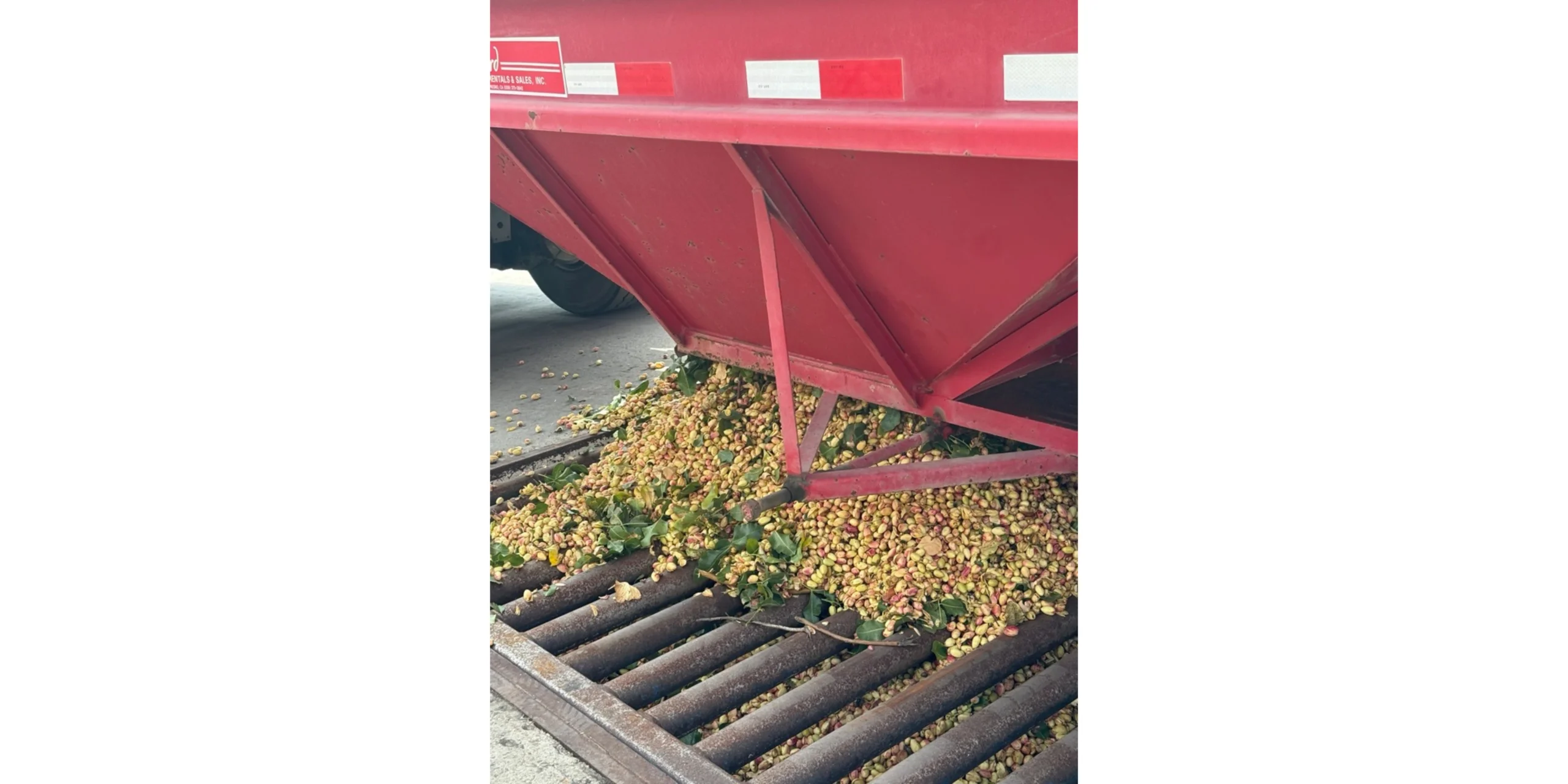
Like many other commodities, harvest of California pistachios started early. “For us, harvest began this week, on August 11, and is expected to run through mid-September,” says Jeff Nichols with Nichols Farms. Typically, harvest in the state starts closer to late August or early September.
This year’s production volume is expected to be drastically lower compared to average. “Total yields are expected to be anywhere between 600 and 800 million lbs., down at least 50 percent from last year’s near record yield,” Nichols commented. Last year, growers in the state harvested a total of 1.6 billion lbs.
Male pollen infertility
The decline is largely due to early spring heat waves which caused the male pistachio trees’ pollen to become infertile. This has significantly impacted the number of female trees that were successfully pollinated to produce fruit.

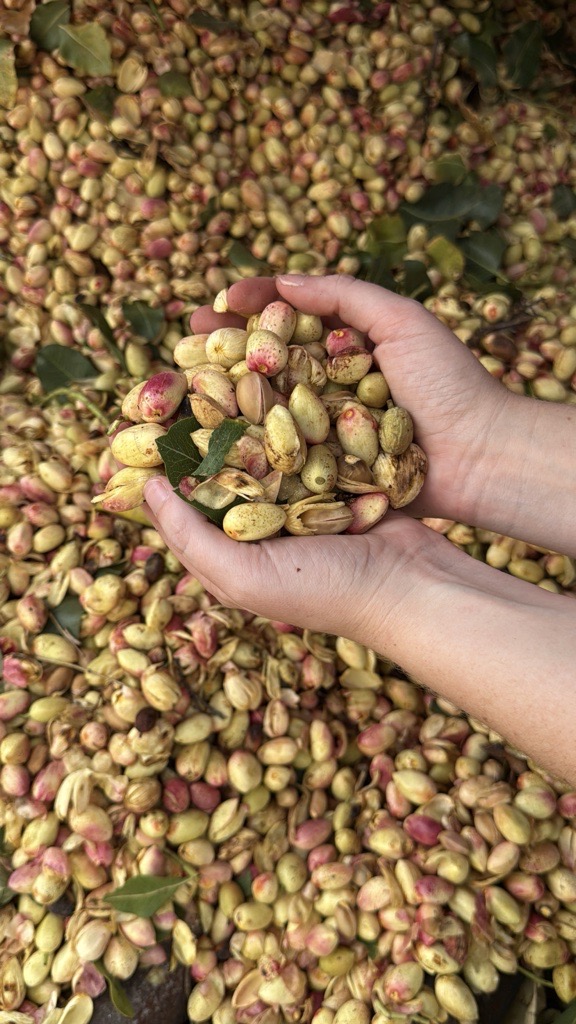
Demand is expected to remain high with decreased supply. “We are doing our best to navigate the shortage thoughtfully to ensure customers receive fair supply of products,” Nichols said. However, the short supply is expected to result in an increase in pricing, with wholesale pricing likely seeing an increase of 25 to 30 percent.
Tightening export markets
California is the world’s leading exporter of pistachios and about two-thirds of the crop typically makes its way overseas. However, exports have become increasingly challenging and export markets are tightening. “Due to ongoing shipping challenges in the Middle East, we have eliminated all spot shipments to that region for now,” shared Nichols. “That said, we will continue to supply other export markets, working to maintain established footholds.” Tariffs aren’t helping either and because they are variable, they will likely have an impact on export levels.
Looking ahead
While this year’s production volume is expected to be low, El Niño is anticipated to create a boom in production next crop year. “It is not for the reason most may think, which is the added water for the trees. Instead, the additional water will remove salt from the soil which creates an even more favorable condition for the trees,” Nichols shared. Although it is still a ways out, next year’s yields are expected to be much improved from this year’s.